Decoding Feedback Networks: Assessment Summaries Guiding Privilege Structures and Transaction Pathways in Portable Reel Systems
Greta Simmons · Jul 27, 2026

Decoding Feedback Networks: Assessment Summaries Guiding Privilege Structures and Transaction Pathways in Portable Reel Systems
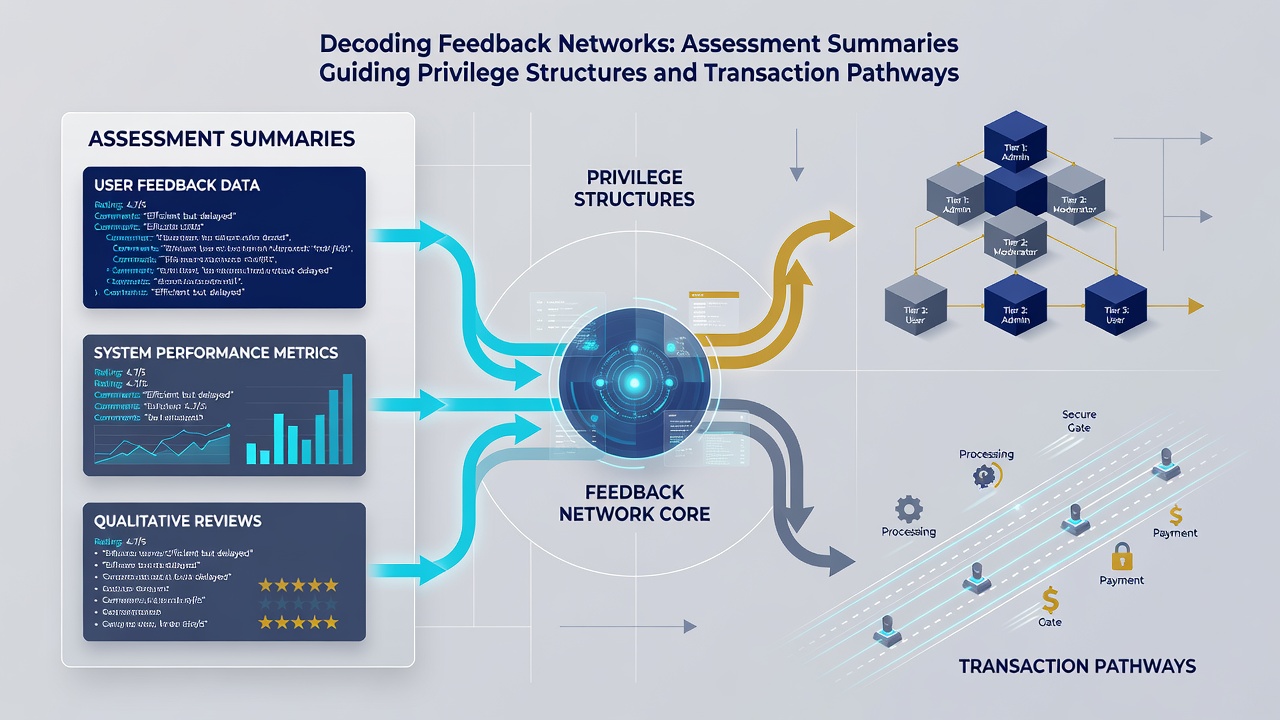
Feedback networks operate as layered data collection frameworks that capture user interactions across portable reel systems and convert those signals into assessment summaries which then shape privilege structures and transaction pathways. Researchers at institutions studying digital entertainment platforms have documented how these networks aggregate session metrics, rating inputs, and behavioral patterns into structured reports that administrators rely on for tier assignments and payment routing decisions. Data from multiple regional markets shows that systems updated in early 2025 began routing assessment summaries directly into automated privilege allocation engines, reducing manual review cycles by measurable percentages according to industry reports.
Core Components of Feedback Collection
Portable reel systems generate continuous streams of interaction data through touch interfaces, spin histories, and session durations, and these elements feed into centralized feedback networks that apply weighting algorithms to produce assessment summaries. Observers note that the summaries highlight patterns such as frequency of engagement and response to interface changes, which in turn inform how privilege structures evolve for different user cohorts. Transaction pathways receive parallel inputs from the same summaries, allowing systems to prioritize certain payment methods or verification steps based on aggregated performance indicators. Studies conducted by European research consortia indicate that integration of these components became standard practice across major platforms by mid-2025.
Assessment Summaries and Privilege Allocation
Assessment summaries distill raw feedback into categorized outputs that directly influence privilege structures, assigning users to tiers that unlock specific features within portable reel environments. Those who have examined platform architectures describe how summary scores determine access levels, from basic transaction options to advanced routing capabilities that affect speed and cost of fund movements. In July 2026 several operators are scheduled to deploy enhanced summary engines that incorporate real-time sentiment analysis drawn from in-app communications, according to announcements from technology providers serving the sector. This development builds on earlier models where static summaries guided static privileges, shifting instead toward dynamic adjustments that respond to ongoing network inputs.
Transaction Pathways Shaped by Network Outputs
Transaction pathways in portable reel systems follow directives embedded in assessment summaries, which evaluate user history and direct traffic toward approved channels or accelerated processing queues. Figures released by the Australian Communications and Media Authority reveal that platforms incorporating feedback-driven routing experienced shifts in transaction volumes during 2025, with certain pathways seeing increased utilization after summary-based optimizations. The process connects user behavior metrics to backend rules that govern deposit limits, withdrawal timelines, and verification requirements, creating a closed loop where network outputs continuously refine pathway efficiency. Industry organizations tracking these developments have recorded cases where summary thresholds triggered automatic upgrades in transaction priority for qualifying accounts.
Integration Challenges and Regional Variations
Implementation of feedback networks across different jurisdictions introduces variations in how assessment summaries guide privilege structures and transaction pathways, with regulatory environments in North America and Asia applying distinct oversight mechanisms. Research papers from academic groups in Canada have examined how data privacy constraints affect the granularity of summaries available for privilege decisions, leading some operators to adopt aggregated rather than individualized outputs. Yet the underlying architecture remains consistent: networks collect inputs, summaries translate them into directives, and those directives steer both access tiers and payment flows. Observers tracking July 2026 timelines anticipate further standardization as cross-border operators align their systems with emerging technical standards proposed by international gaming associations.
Conclusion
Feedback networks continue to serve as the connective tissue between user activity and operational decisions in portable reel systems, with assessment summaries functioning as the interpretive layer that calibrates privilege structures and transaction pathways. Evidence from regulatory filings and technical studies demonstrates that this architecture has become embedded in platform design across multiple markets, and scheduled enhancements in 2026 are expected to deepen the integration of real-time data flows. Those monitoring the sector report ongoing refinements that maintain the core relationship between collected feedback and the resulting structural adjustments.